

Product Description
WHAT IS A GAUGE REGULATOR?
The Antique Automobile Radio Gauge Voltage Regulator is a crucial component designed to ensure the proper functioning of vintage car radios, particularly those installed in classic automobiles manufactured before the advent of modern electronic systems. This essential device plays a vital role in regulating the voltage supplied to the radio, thereby preventing damage and ensuring optimal performance.
In vintage vehicles, electrical systems operate at a lower voltage compared to contemporary cars. The Antique Automobile Radio Gauge Voltage Regulator is specifically engineered to accommodate this lower voltage environment, providing a stable power supply to the radio unit without overloading or causing malfunctions.
One of the key functions of the voltage regulator is to maintain a consistent voltage level despite fluctuations in the vehicle's electrical system. This is essential for preserving the integrity of delicate electronic components within the radio, such as vacuum tubes, capacitors, and resistors. By regulating the voltage within a safe operating range, the voltage regulator helps to prevent overheating, component failure, and other issues that can arise from excessive voltage.
The Antique Automobile Radio Gauge Voltage Regulator is typically installed between the car's electrical system and the radio unit. It acts as a buffer, smoothing out voltage spikes and ensuring a steady flow of power to the radio, regardless of variations in engine speed, electrical load, or other factors that may affect voltage levels.
In addition to its primary role in voltage regulation, some vintage car radio voltage regulators also incorporate built-in protection features to safeguard against potential damage. These may include overvoltage protection, short-circuit protection, and thermal shutdown mechanisms, which help to enhance the reliability and durability of the regulator under various operating conditions.
Overall, the Antique Automobile Radio Gauge Voltage Regulator is an essential component for maintaining the functionality and longevity of vintage car radios. Its ability to regulate voltage and provide reliable power supply ensures that classic car enthusiasts can enjoy their favorite tunes with confidence, knowing that their radio units are protected and operating at their best.
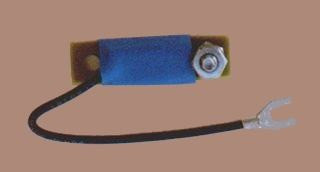
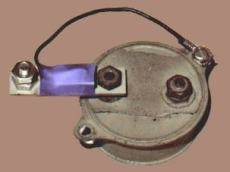
Many older cars that were originally designed for 6 volt systems have been changed to 12 volt systems. Although many of the electrical components in your car can be easily changed to 12 volts, instrument gauges cannot be easily modified. Early street rodders and customizers used resistors to reduce the voltage to the gauges. While resistors can protect the gauge from overvoltage, they limit the accuracy. A gauge regulator provides a constant voltage to the gauge regardless of the engine speed or sending unit load. The GR-1 gauge regulator is designed to mount directly on the terminal on the back of the gauge. They are easier to install than resistors, and are priced competitively. Their reliability has been proved on thousands of vehicles and like all of our products is backed with a one year warranty – beware of imitations!
The GR-1 Gauge Voltage Regulator is designed to provide the proper voltage source to Fuel, Temperature, and other similar gauges that were designed for 6 volt systems, but are now to operating in 12 volt negative ground systems. It is not intended for Amp meters or Tachometers. The GR-1 features include small size, ease of installation, high reliability, and tight regulation which will give your gauges a degree of accuracy which is superior to the original unregulated system. Each GR-1 will operate one gauge. If your car has several gauges, you will need one for each. Amp meters work on current, and are not voltage dependent. They will function correctly on 6 or 12 volt, but if your car was originally positive ground, you will have to reverse the terminals on your amp meter to make it read correctly on negative ground.
The Antique Automobile radio GR-1 Gauge Voltage Regulator is now available exclusively from the following dealer. Please contact them for more information.
Common Questions About the Gauge Regulators
What does a gauge regulator do?
A gauge voltage regulator steadies the voltage to instruments or radio circuits on older cars so delicate electronics aren't over-voltaged.
Which cars use these?
These are commonly used on classic vehicles built before modern regulated electrical systems; match the regulator to your radio or gauge application.
What else is worth knowing?
This essential device plays a vital role in regulating the voltage supplied to the radio, thereby preventing damage and ensuring optimal performance.
What is the Gauge Regulators designed for?
In vintage vehicles, electrical systems operate at a lower voltage compared to contemporary cars.
How is the Gauge Regulators meant to be used?
One of the key functions of the voltage regulator is to maintain a consistent voltage level despite fluctuations in the vehicle's electrical system.
What stands out about the Gauge Regulators?
This is essential for preserving the integrity of delicate electronic components within the radio, such as vacuum tubes, capacitors, and resistors.
Antique Automobile Radio specifications
- Antique Automobile Radio factory-fit reproduction radio (Made in USA manufacturer)
- Preserves original face, knobs, and pushbutton look while adding modern electronics
- AM/FM tuner with Bluetooth (wireless voice and audio — Bluetooth 3.0 + EDR per manufacturer pairing guide)
- Auxiliary input on the rear of the radio; Bluetooth has priority when active
- Designed to fit the original dash opening without cutting metal (vehicle application per listing)
- Designed to work with the original antenna on many applications
- Use modern 4-ohm speakers — do not use original grounded speakers (they will not handle the power/frequency range)
- 12 V negative-ground vehicle electrical systems (use a booster/inverter for other systems when required)
Wiring / tech tips — classic car
From Antique Automobile Radio installation guidance (model manuals):
- Be safe — disconnect one battery terminal until installation is complete.
- Do not operate the radio directly from a battery charger.
- Never use a fuse rated for more than 10 amps.
- Use only 4-ohm speakers; never allow any speaker lead to become grounded when the radio is on.
- Locate antenna jack, AUX input, and line outputs before mounting; bench-test with a charged battery when practical.
Bluetooth pairing: put the radio in Auxiliary mode and follow Antique Automobile Radio pairing instructions (device name appears like AARInc.BT…).
Vintage Car Radio does not offer installation.
Manuals
Use the model PDF packed with your radio when provided. Published sheets we can link:
Manufacturer support: support@radiosforoldcars.com · 800-933-4926 · 727-785-8733.
Warranty
Antique Automobile Radio manufactures these units in the USA. For warranty or service questions, contact support@radiosforoldcars.com or 800-933-4926, or Vintage Car Radio at 844-802-4499 / 574-226-6676 with your order number.
Vintage Car Radio does not offer installation.
FAQ — classic car
Will this fit without cutting the dash?
Antique Automobile Radio designs these to fit the original opening for the titled application (classic car). Compare your dash to the photos.
How do I pair Bluetooth?
See the manufacturer pairing page linked under Manuals. The radio remembers recently paired devices.
Can I keep original speakers?
No — use modern 4-ohm speakers; original grounded speakers are not suitable.
Do you install?
No.
Need help?
844-802-4499 / 574-226-6676, or Antique Automobile Radio support@radiosforoldcars.com.
Specs
Wiring / Tech Tips
Manuals
Warranty
Warranty
Antique Automobile Radio manufactures these units in the USA. For warranty or service questions, contact support@radiosforoldcars.com or 800-933-4926, or Vintage Car Radio at 844-802-4499 / 574-226-6676 with your order number.
Vintage Car Radio does not offer installation.
